

Services GEO
GEO and AI Search Visibility Services in Hong Kong
Make the brand answerable in AI search, with evidence
GEO — generative engine optimization — helps AI systems understand and cite your brand. Moxie builds AI search readiness from audit through measurement across Overviews, answer engines, and related surfaces.
We strengthen brand entities, write answer-first content, implement technical GEO and structured data, then monitor mentions, citations, and referral patterns as platforms change.
Programmes sit alongside classic SEO so traditional rankings and AI-assisted discovery reinforce the same facts, proof points, and category claims.

- Starting audit
- A defined set of business questions and current AI answers
- Foundation
- Sound SEO plus documented facts the models can cite
- Workstreams
- Entity, answer-first content, structured data, and monitoring
- Reporting rule
- Observed mentions and citations, not speculative claims
From unanswered prompts to citable brand evidence
Generative engine optimization starts with what AI systems already say. We record those answers, close fact and content gaps, then monitor mentions and citations over time.
-
01
Ask
A defined set of buyer questions is run through AI search tools so you can see the current story about the brand.
-
02
Evidence
Facts, proof, and source pages are checked: what is missing, conflicting, or too thin to cite.
-
03
Publish
Answer-first pages, entity consistency, and structured data give systems something accurate to draw from.
-
04
Watch
Mentions, citations, and referral signals are monitored, and reporting stays honest about what was observed.
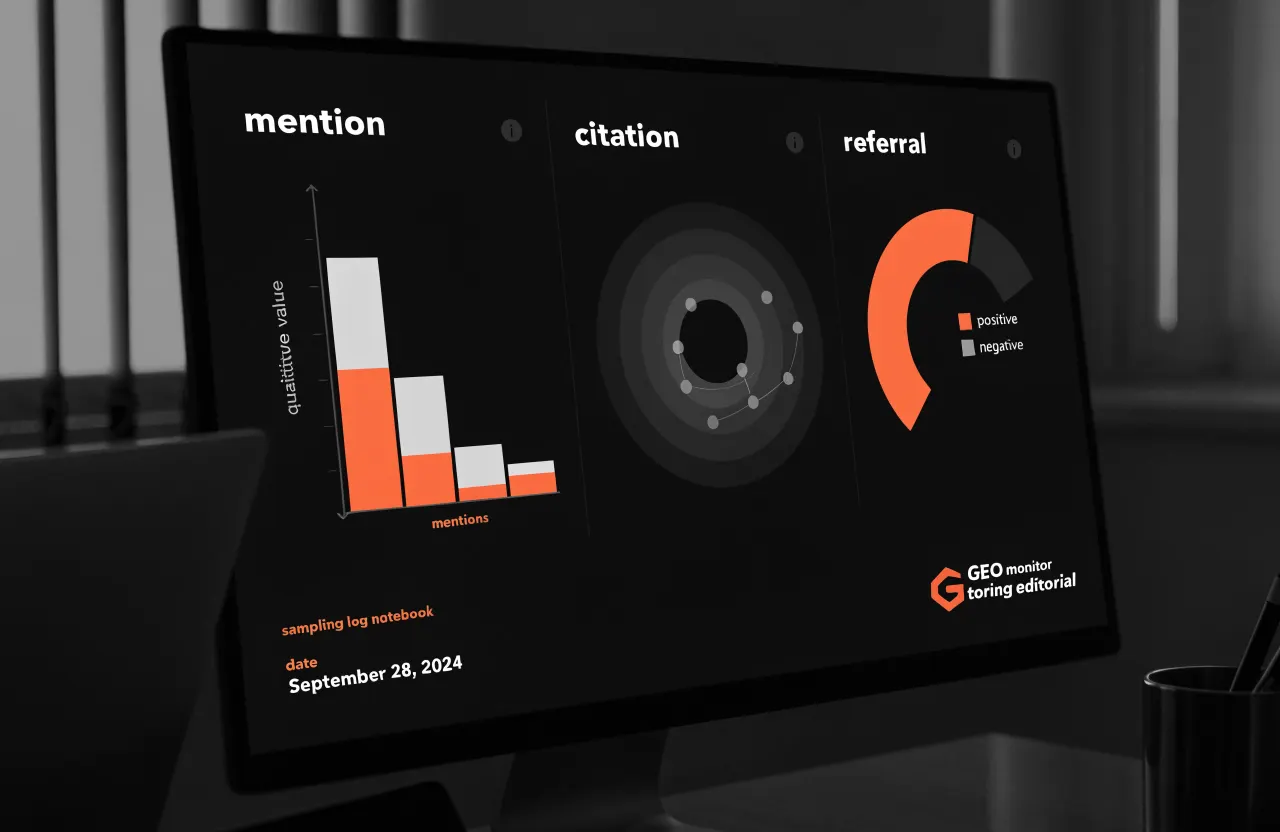
Buyers increasingly ask artificial intelligence systems for recommendations before they click traditional results. Generative engine optimization matters because category claims that are not structured for AI answers become invisible in the new discovery layer.
Entity clarity, answer-ready pages, and proof density help brands appear in AI-assisted search — protecting visibility as search behavior shifts beyond ten blue links.
What a GEO programme includes
-
01
AI search audit and strategy
Visibility gaps, competitor prompts, and a prioritized roadmap based on questions your buyers actually ask.
-
02
Brand entity optimization
Clear definitions, consistent facts, and trusted signals so the brand is described the same way across the site and supporting sources.
-
03
Answer-first content strategy
Direct answers, comparison content, and evidence-led copy that AI systems and people can both use.
-
04
Technical GEO and structured data
Crawlability, entity schema, and machine-readable content so facts are available in a form systems can parse.
-
05
AI visibility monitoring
Mentions, citations, referral traffic, and platform changes — reported as observed signals, not as a promised ranking.
How a GEO project runs
-
01
Question set
We agree the business questions that matter and record what AI tools currently answer.
-
02
Gap map
Facts, pages, and citations that are missing or conflicting are listed with owners.
-
03
Build
Entity, content, and structured data work ships against that map, on top of sound SEO.
-
04
Monitor
Mentions and citations are checked on a defined cadence as platforms change.
-
05
Brief
Leaders receive what was observed, what changed on the site, and what the next cycle will publish.
What your team receives
- An AI search audit against an agreed question set.
- A gap map for facts, pages, and entity consistency.
- Answer-first content and structured-data recommendations.
- Monitoring of mentions, citations, and referral signals.
- Reporting that separates observed visibility from speculation.
Frequently Asked Questions
Straight answers on scope, timing, and how we partner.