
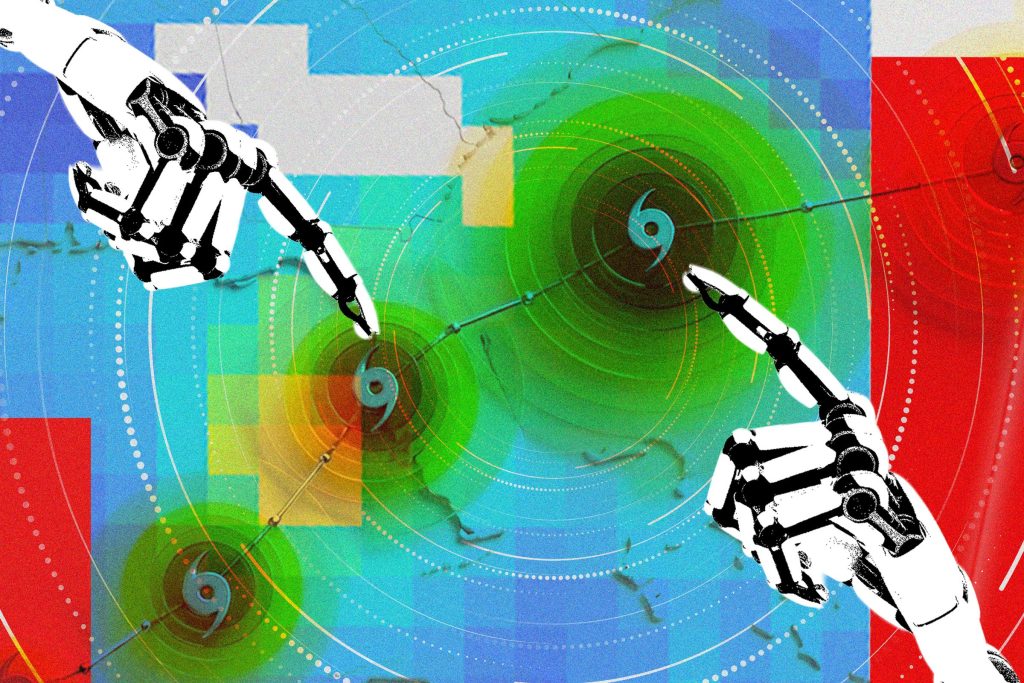
In recent years, the advent of artificial intelligence (AI) has transformed numerous sectors, including meteorology. DeepMind, a leader in AI research, has introduced its WeatherNext model, which claims to predict hurricanes with greater accuracy and earlier than existing methods. This breakthrough not only showcases the potential of AI in enhancing weather forecasting but also presents significant implications for enterprise IT marketing, particularly in the Asia-Pacific (APAC) region.
Understanding AI in Weather Prediction
AI refers to the simulation of human intelligence in machines programmed to think and learn like humans. In the context of weather prediction, AI systems analyze vast datasets to identify patterns and make forecasts. Traditional meteorological models rely heavily on high-resolution data from satellites and weather stations. However, DeepMind’s WeatherNext model utilizes lower-resolution data, demonstrating that AI can extract valuable insights from less detailed information.
What Changed with WeatherNext?
The introduction of WeatherNext marks a significant shift in how meteorological predictions are made. Traditionally, forecasting hurricanes has been a complex process, requiring extensive data collection and analysis. WeatherNext employs advanced machine learning algorithms to process historical weather data and current conditions, allowing it to predict a storm’s track and intensity more effectively. This capability is particularly noteworthy because it enables earlier warnings, which are crucial for disaster preparedness.
Why This Matters for Enterprise IT Marketing
The implications of WeatherNext extend beyond meteorology and into the realm of enterprise IT marketing. As businesses increasingly rely on data-driven decision-making, the ability to predict and respond to environmental changes becomes essential. For IT marketers, this presents an opportunity to position their products and services as essential tools for organizations looking to leverage AI for operational efficiency and risk management.
- Data Utilization: Marketers should emphasize how their solutions can help businesses harness data for predictive analytics, similar to how WeatherNext uses lower-resolution data to make accurate forecasts.
- AI Integration: Highlighting the integration of AI technologies in enterprise solutions can attract clients interested in innovative approaches to problem-solving.
- Risk Management: With climate change leading to more frequent and severe weather events, IT solutions that enhance risk management capabilities will be in high demand.
Practical Framework for IT Marketers
To effectively leverage the advancements in AI for marketing strategies, IT marketers can adopt the following framework:
- Educate Your Audience: Develop content that explains the benefits of AI in predictive analytics and how it can be applied in various sectors, including disaster management.
- Showcase Case Studies: Use real-world examples, such as the WeatherNext model, to illustrate the effectiveness of AI in improving operational outcomes.
- Foster Partnerships: Collaborate with AI research organizations or universities to stay at the forefront of technological advancements and enhance credibility.
- Focus on Local Needs: Tailor marketing messages to address the specific challenges faced by businesses in the APAC region, such as natural disasters and climate variability.
- Continuous Learning: Stay updated on AI developments and their implications for various industries to ensure that marketing strategies remain relevant and effective.
Implications for the APAC Region and Hong Kong
The APAC region, particularly Hong Kong, is increasingly vulnerable to extreme weather events due to climate change. The ability to predict hurricanes and other natural disasters earlier can significantly enhance preparedness and response efforts. For IT marketers in this region, there is a unique opportunity to promote solutions that help businesses mitigate risks associated with climate change. By aligning marketing strategies with the growing emphasis on sustainability and resilience, IT brands can position themselves as leaders in providing innovative solutions for a changing environment.
Conclusion
DeepMind’s WeatherNext model represents a significant advancement in hurricane prediction, showcasing the transformative power of AI in meteorology. For enterprise IT marketers, this development underscores the importance of leveraging AI for data-driven decision-making and risk management. By adopting a strategic approach that emphasizes education, real-world applications, and local relevance, marketers can effectively engage with businesses seeking to navigate the challenges posed by climate change. This article serves as a curated educational briefing on the topic, with further insights available at https://www.wired.com/story/deepmind-ai-model-can-predict-hurricanes-earlier/.