

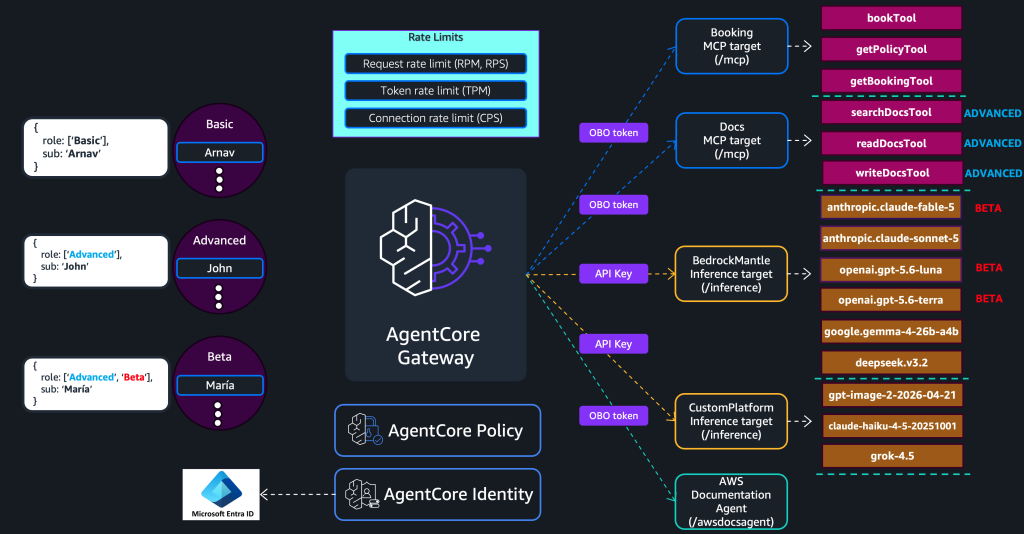
In the rapidly evolving landscape of artificial intelligence (AI), managing traffic effectively has become a crucial aspect of ensuring system reliability and performance. Rate limiting is a technique used to control the amount of incoming and outgoing traffic to or from a network. In the context of AI, particularly with platforms like Amazon Bedrock’s AgentCore gateway, rate limiting helps enforce controls on per-user and per-target traffic. This article aims to elucidate the mechanisms of rate limiting, its recent advancements, and its implications for enterprise IT marketing, particularly in the APAC region.
What Changed in Rate Limiting for AI Traffic?
Recent developments in AI traffic management have introduced more granular controls over how requests are handled. The AWS Machine Learning Blog highlights the ability to configure rate limits based on JSON Web Token (JWT) claims or Identity and Access Management (IAM) identities. This means that businesses can now define specific request, token, and connection limits tailored to individual users or target systems. Such configurations are essential for protecting downstream models, tools, and agents from potential traffic spikes that could lead to system overloads or failures.
Why It Matters for Enterprise IT Marketing
For enterprise IT marketers, understanding the implications of rate limiting is vital. As businesses increasingly adopt AI technologies, the demand for robust and reliable systems grows. Rate limiting not only enhances system performance but also improves user experience by preventing bottlenecks. By effectively managing traffic, organizations can ensure that their AI solutions remain responsive and efficient, thereby fostering customer trust and satisfaction.
Moreover, the ability to enforce traffic controls based on user identity or specific claims allows for more personalized marketing strategies. Marketers can segment their audience based on usage patterns and tailor their messaging accordingly. This level of customization can lead to improved engagement and conversion rates, as clients feel their unique needs are being addressed.
A Practical Framework for Implementing Rate Limiting
To effectively implement rate limiting in your enterprise AI systems, consider the following framework:
- Define Your Objectives: Determine what you aim to achieve with rate limiting. Is it to protect your models from overload, enhance user experience, or both?
- Identify Key Metrics: Establish the metrics that will guide your rate limiting strategy, such as average request rates, peak usage times, and user behavior patterns.
- Configure Limits: Utilize tools like Amazon Bedrock to set request, token, and connection limits based on JWT claims or IAM identities.
- Monitor and Adjust: Continuously monitor traffic patterns and system performance. Be prepared to adjust your rate limits as necessary to optimize both performance and user satisfaction.
- Educate Your Team: Ensure that your marketing and technical teams understand the implications of rate limiting and how it can be leveraged for better customer engagement.
Implications for APAC and Hong Kong IT Marketers
In the APAC region, where digital transformation is accelerating, the importance of effective traffic management cannot be overstated. Hong Kong, as a major financial hub, is witnessing a surge in AI adoption across various sectors, including finance, healthcare, and logistics. For IT marketers in this region, implementing rate limiting can be a differentiating factor in a competitive market.
Moreover, understanding local regulations and user expectations is crucial. As data privacy becomes a growing concern, ensuring that traffic management practices comply with local laws can enhance brand reputation and customer loyalty. Marketers should also consider the cultural nuances of their audience when crafting personalized messaging based on traffic data.
Conclusion
This article serves as a curated educational briefing on the importance of configuring rate limits for AI traffic on AgentCore gateways. By understanding and implementing effective rate limiting strategies, enterprise IT marketers can enhance system performance, improve user experience, and drive better engagement with their target audiences. For further insights, please refer to the original source: AWS Machine Learning Blog.